My Business Works · the operating system side of My Business Creative
The operating system that does the owner's work.
Your business runs through you: the calls, the quotes, the invoices, the chasing, the numbers. My Business Works builds the operating system that does that work for you, on your own accounts and yours outright, and runs it month by month. You keep the decisions, at checkpoints you set. Your week comes back.
My Business Works puts one operating system under your whole business. The work that runs through you today, it does: every enquiry answered and booked, every quote and invoice out and chased, the month read for you. You keep the decisions, at checkpoints you set. It is built on your own accounts, so it is yours outright, and we run it for you month by month.

What the works run
The best builder
can't run it all.
Their business can.
The works do the owner's work: book, file, quote, invoice, chase, write and report. You keep the decisions, at your checkpoints.



Tuesday, 2:14 pm
Rang about a re-roof.
You were on the roof.
Booked for Thursday, 8 am.
Quote 214
Drafted after the site visit.
Sent once you signed it off.
Chased on its day. Accepted.
What My Business Works is
- The problem
- Every owner-led business is different, and every one has the same problem: it runs through the owner. The calls, the quotes, the invoices, the follow-ups and the numbers all wait for one person, usually after hours.
- What changes
- The business keeps running when you are on the tools, in a meeting or away: no enquiry is lost, nothing waits on you to remember it, nothing goes unchased, and you read the month in a minute. Your week comes back, and a business that runs without you is worth more than one that is you.
- Yours to own
- Not a subscription. The systems are set up in your name, on your own accounts, with every enquiry, quote and invoice in one record that is yours. They grow with the business and stay with it as an asset if you ever sell. What you pay month by month is us running them; if we parted, they would keep running.
- Who runs it
- We do, month by month: the sweep that keeps every system right, the report you can read in a minute, and the next system when the numbers say so. You hold the checkpoints: what goes out in your name waits for your sign-off, wherever you want one.
The systems, in the order your business needs them
It is not one task automated. It is the office, run without you in the middle, so the business keeps going when you are on the tools, in a meeting or away. The systems go in one at a time, the one that gives back most of your week first, and nothing goes out in your name without passing a checkpoint you set. What drives the cost is how many systems your business needs.
Running first in Levi's own three businesses, each on an operating system of its own. One of them is shown on this page.
How it works
01
The call, or the discovery
Which systems your business needs, in what order, and what each gives back. No two businesses get the same set; the one that gives back most of your week goes in first.
02
The install, on your own account
Each system set up in your name, on your own accounts, and run until it is right. You choose where the checkpoints sit: every quote before it goes, or the template once. Nothing goes live before you have signed off what it says to your customers.
03
The month's running
Each month: the sweep that keeps every system right, the report you can read in a minute, and the invoice. This is how the works keep running after the build.
04
The next system
When one is running, the next one in the order goes in. Each one is added because the numbers say so, not because it exists.
Who it is not for
- Anyone buying the tools as the pitch. The systems are described here by what they do for the owner, and that is how they are chosen.
- A business where the position is the problem. A business that runs smoothly still loses the price-shopped quote; the Foundation Build fixes that first.
- An owner who wants to do every task themselves. The works give back the week only if they are allowed to run; the decisions stay yours at the checkpoints, the doing does not.
What it is built on
Every system on this page runs in Levi's own businesses first. Horizon Landscape, Systemaize Health and My Business Creative each run on an operating system of their own, and what runs is measured every month. What runs in ours is what goes into yours. One of them is below: the hub that runs Systemaize Health.
What runs in our own businessesA business ownerAn agentic system runs the company's week.
Agentic: it does the work itself, and stops at the checkpoints you set. The screens are the hub's demo mode.
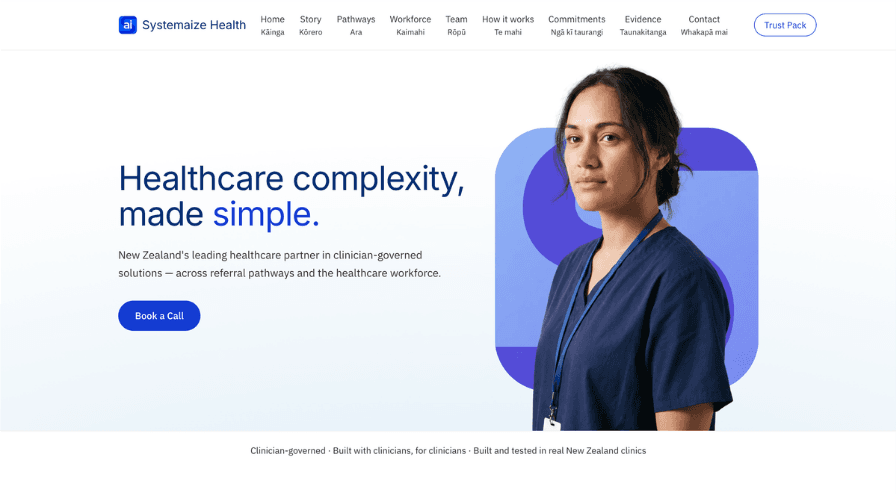
- The website
SystemaizeHealth
- Positioning
- Brand
- Website
- Operating system
Strategic market positioning for a clinician-governed health technology company: what it is, who it's for and why the sector should back it, communicated clearly enough to open doors. Behind the website, SAI Hub runs the company's week, with the founder deciding at the checkpoints.
OutcomeIndustry-leading relationships and partnerships, and the team and company growth that followed.
Levi's own account, as founder, 2026.
- The operating system
SAIHub

- Operating system
- AI, with checkpoints
- Owned, not rented
- Runs the week
Every meeting on the record the same night, every promise a task with an owner, every person's week set within their hours, every project reporting on itself. AI does the work; a person decides at every checkpoint.
OutcomeNobody carries the week. The founder's part is decisions, in minutes, from a phone.
- The checkpoint
Review

- It proposes
- You decide
- The evidence
- Risk flagged
Four proposals from one meeting, each with the words it came from. Approve, edit or reject. Nothing reaches anyone's week until it is approved here, and every approval is logged with who made it.
OutcomeA wrong proposal is obvious, and the founder never approves on trust.
- The plan
Projects

- Month by month
- A light per project
- Roadblocks
- The next part
Every project has a page, a goal, its next part and a light that shows its state from the facts. Each one is read every week and reports where it stands, what is stuck and what needs a decision.
OutcomeLeadership sees which projects need a hand, without a status meeting.
- The record
Meetings

- On the record
- Decisions
- Questions
- Ideas
Every meeting is on the record the same night: the summary, the decisions, the open questions and the ideas, each tied to the moment it was said. Nobody writes anything up.
OutcomeThe company has a memory outside anyone's head.
- The errands
The AIteammate

- Research
- Drafts
- Bookings
- A sign-off on everything
A goal from anyone: a booking, research, a draft, a plan. It works out the real problem, does the work, checks it against the task's done-when and reports back. It never sends, spends or signs: a person does.
OutcomeThe work between meetings gets done, with a sign-off on everything.
What drives the cost
Two things: the build, which depends on how many systems go in and the size of the business, and the month's running, which is a set amount for the sweep, the report and the invoice. Both are in the proposal after the call. There is no subscription to the systems themselves: built once, they are yours outright. Nothing runs before its scope is signed, and every account is yours from the first day, so if we parted tomorrow it would keep running.
The questions owners ask before they ring.
What do I have to do?
Less each month. You say where the checkpoints sit and sign off what goes out in your name; the system does the doing, and the month's running is ours. What stays yours is the work only you can do, and the decisions.
Does it replace me?
It replaces the owner's doing, not the owner. The system books, files, drafts, sends, chases and reports; you decide what goes out in your name, at checkpoints you set, and you read the month in a minute. You stop being the office and stay the owner.
Is it the same for every business?
No. The problem is the same everywhere, the owner in the middle; the system that fixes it is set up for yours: the systems your business needs, in the order that gives back most of your week, fitted to how it already works.
Who owns the systems? Is it a subscription?
You do, outright, and no. Every account, number, list and conversation is in your name; the systems are built once, grow with the business, and go with it as an asset if you ever sell. We run them for you month by month and never hold them; stop the running, and what was built stays and keeps working.
What happens when something stops?
The month's running includes the sweep that catches it and the fix. You are told what stopped and what changed, in the month's report, and there is always a name to ring.
Do I need a Foundation Build first?
Not always. If the position is sound and the owner is the bottleneck, the works come first. The call tells which.
Start with the call.
Twenty minutes on which systems would give you your week back, and in what order. No pitch.